



















一、App Software Development的核心价值与行业实践
App software development plays a pivotal role in digital transformation; it serves not only as a key tool for enterprises to enhance operational efficiency and optimize user experience, but also as a core driving force for fostering industry innovation and expanding business boundaries. By building feature-rich and highly interactive mobile applications, enterprises can establish deep connections with their users, cater to personalized needs, and gain a competitive edge amidst fierce market competition. The mobile application development lifecycle encompasses a comprehensive process—spanning requirements analysis, design, development, testing, deployment, and maintenance—wherein each stage exerts a significant influence on the quality and ultimate success of the final product.
1.1 金融行业的App开发应用案例
The financial sector stands as one of the most mature and extensive domains for the application of app software development. Taking a major U.S. bank holding company as an example: in an effort to enhance customer communication and deliver superior support through innovation and automation, the bank decided to redesign its mobile banking application to replace its legacy platform. Through a collaboration with Cognizant Digital Experience, a next-generation mobile banking app was developed for both iOS and Android platforms, seamlessly integrating mobile activities, analytics, and reporting capabilities into business process management workflows as well as other productivity and sales channels. The new application offers customers a comprehensive banking experience, featuring functionalities such as bill payment, sending and receiving payments via Zelle, fund transfers, credit score access, and local branch location services. The results of this app software development initiative were remarkable: mobile channel traffic across the bank’s entire customer base doubled from 30% to 65%; the app consistently maintained a top-three ranking in U.S. Banking Mobile App Satisfaction studies; it successfully supported 3.5 million active users on a personalized mobile banking platform; and both the iOS and Android applications saw a 100% improvement in their user ratings.(Mobile Banking App Development—Case Study | Cognizant)。
Another quintessential example is Aella, a Nigerian fintech company. In 2015, Aella launched Nigeria’s first digital lending platform, utilizing a mobile application to provide much-needed credit services to underserved populations. As the business expanded rapidly, its legacy technical infrastructure proved insufficient to meet growing demands and began to suffer from performance issues. Aella opted to partner with Google Cloud to construct a new platform, leveraging Google Kubernetes Engine for cluster orchestration, Cloud Run to manage staging environments, Cloud SQL to provide visibility into database operations, and BigQuery for analytics. Additionally, they utilized the Observability suite—including Cloud Logging and Cloud Trace—to establish robust alerting mechanisms. Following the migration, Aella successfully reduced its infrastructure costs by 70% and boosted service availability from 95% to 99%. Furthermore, by exposing services such as digital wallets, KYC protocols, employee loans, same-day loans, and merchant payment tools via APIs, the company has made these offerings available to local businesses, thereby further advancing financial inclusion.(Aella case study | Google Cloud)。
1.2 Innovative Practices in Healthcare App Development
App software development within the healthcare sector is increasingly centering on AI-driven capabilities and regulatory compliance to continuously drive innovation in healthcare service delivery models. PASTA—an AI-driven mobile platform for chronic disease management developed by Kakao Healthcare—serves as a prime example of this trend. PASTA is designed to leverage AI to understand each individual user and their unique health profile, thereby delivering personalized health recommendations. Its core functionalities include Vision AI-based food and nutrition recognition (accessible via the camera interface), voice-to-text health journaling, and a notification tool that suggests lifestyle modifications based on factors such as blood glucose levels, dietary history, and lifestyle habits. To enhance the capabilities of its AI chatbot, Kakao Healthcare partnered with Google Cloud Consulting, utilizing foundational AI models available in Model Garden to rapidly iterate and develop a more accurate, agentic AI chatbot. This chatbot employs a classification module to interpret user intent; a rewriting module to translate natural-language queries into clearer, machine-readable requests; Vertex AI and Gemini Flash to retrieve relevant information from both internal data repositories and public datasets; and a re-ranking module to select the response that best aligns with the user’s original intent. Concurrently, the use of Firestore to cache the context of user chat histories has significantly accelerated response times for frequently asked questions. These measures enabled Kakao Healthcare to deploy its agentic AI chatbot within a mere few weeks—integrating a flexible agent capable of leveraging multiple Large Language Models (LLMs)—thereby providing users with faster, more accurate healthcare-related information while simultaneously bolstering the safety and security protocols surrounding these medical responses.(Kakao Healthcare case study | Google Cloud)。
NeverAlone stands as another exemplary innovation in healthcare applications. Developed through a collaboration between Digital Scientists and CommuniCare Health Services, it is a remote patient monitoring platform designed for seniors aging in place. The platform features large touch targets, a clear visual hierarchy, and 24/7 video access to personal care partners. Within just nine months, Digital Scientists delivered a fully HIPAA-compliant ecosystem, demonstrating how thoughtful, accessible design can simultaneously improve patient outcomes and expand market reach.(Healthcare App Development in 2026: A Guide for Business Leaders)。HIPAA compliance is an indispensable component of healthcare app development; it ensures the privacy and security of patient data, serving as the foundation for building user trust and safeguarding service quality.
1.3 Impact of Applications in the Education and Retail Sectors
In the education sector, App Software Development—empowered by AI and personalized learning—has significantly enhanced both the accessibility and effectiveness of education. Knowunity, an educational platform serving over 20 million students worldwide, processes more than 350 million AI requests monthly using Google Cloud’s Gemini models. Its core innovation lies in combining student-generated content with Google Cloud’s global infrastructure and Gemini’s AI capabilities, thereby creating a scalable solution that provides every student with a 24/7 “private tutor in their pocket.” By leveraging Retrieval Augmented Generation (RAG) technology to feed learning materials into the language model’s context, Knowunity improves answer quality, minimizes AI hallucinations, and adjusts content complexity to suit each student’s proficiency level. Powered by Google Cloud’s Gemini models, Knowunity has achieved a threefold reduction in latency, thereby elevating the overall learning experience. The platform utilizes BigQuery to store and analyze various data types, while employing different Gemini variants—such as Gemini 2.5 Pro for complex mathematical problems and Gemini 2.0 Flash for simpler queries—to strike an optimal balance between quality, cost, and latency. Surveys indicate that students who used Knowunity for two weeks saw their grades improve by an average of 0.5 points (on a 6-point scale).(Knowunity case study | Google Cloud)。
As a leader among language-learning apps, Duolingo has actively embraced AI technology. In response to the disruption that AI chatbots pose to traditional learning models, Duolingo has integrated ChatGPT-based features—such as AI tutors and personalized learning paths—to enhance user experience and improve learning outcomes. As of 2024, Duolingo boasts 700 million registered users and recorded 175 million downloads during the year, generating $448 million in in-app revenue; this serves as a compelling demonstration of the commercial and social value that educational apps can realize through technological innovation.(Education App Revenue and Usage Statistics (2026))。
In the retail sector, App Software Development places a strong emphasis on user experience optimization and omnichannel integration. Ele.me—China’s leading local lifestyle services platform—sought to acquire high-quality new users and expand its user base amidst fierce market competition. To achieve these goals, the Ele.me team leveraged Apple Ads to launch Discovery campaigns and utilized the Search Match feature to broaden their keyword coverage. They established distinct thematic campaigns targeting both branded and category-specific keywords, closely monitored performance at the individual keyword level, and set more competitive bids for search terms demonstrating high conversion rates. Concurrently, by configuring all campaigns to target “All Users,” they observed that returning users who re-engaged via Apple Ads exhibited superior retention rates and a higher propensity to place a first-time order. Through the implementation of these strategies, within just six months of utilizing Apple Ads, Ele.me saw its total impressions increase by 137% month-over-month and its total app installs rise by 197%. Furthermore, by leveraging keyword insights provided by Apple Ads to optimize the copy and metadata on their App Store product page, they successfully drove sustained growth in organic downloads.(饿了么- 成功案例 – Apple Ads)。
Starbucks’ mobile app centers on speed and convenience, allowing customers to order and pay for beverages and food, tip baristas, and identify songs playing in-store to add them to their Spotify playlists—thereby significantly enhancing the customer experience and fostering brand loyalty.(7 Retailers Who Have Mastered the Best Mobile User Experience)。
App development across different industries entails both common requirements—such as a strong emphasis on user experience, the assurance of data security, and the pursuit of technological innovation—and distinct directions shaped by specific industry characteristics. The financial sector prioritizes security compliance and efficient service delivery; the healthcare sector focuses on precision diagnostics and patient privacy protection; the education sector is dedicated to personalized learning and universal access to knowledge; while the retail sector emphasizes convenient transactions and customer retention. Understanding these shared requirements and unique differentiators is crucial for successfully executing App software development projects.
II. Differences in App Software Development Needs Among Different Roles
In the App Software Development process, different roles, based on their responsibilities and goals, have drastically different core needs for the development process. The CTO, as the strategist for technology, focuses on the stability, scalability, and long-term security and compliance of the technical architecture; startup developers, constrained by resources and the pressure to quickly validate their market presence, prioritize cost control and rapid iteration; while corporate decision-makers, as those ultimately responsible for return on investment, focus on mitigating compliance risks, applying standardized technology stacks, and controlling long-term maintenance costs. These differentiated needs collectively constitute a multi-dimensional consideration system in the App development process, directly impacting technology selection, process design, and resource allocation strategies.
2.1 CTO’s Technical Architecture and Security Compliance Needs
The CTO bears the core responsibility for technology strategic planning and risk control in App Software Development. Their needs are concentrated in three dimensions: modular architecture design, DevOps toolchain integration, and OWASP security protection, to ensure the long-term stability, scalability, and security of the system.
Regarding modular architecture, the CTO needs to build an API-driven, component-based system, enabling functional modules to communicate through standardized interfaces. This facilitates independent upgrades and replacements, especially reducing the impact on the core system when integrating AI functions. For example, adopting a microservices or modular monolithic architecture, combined with Docker containerization and Kubernetes orchestration, allows for flexible scaling and canary deployments.A CTO Checklist: Building an AI-Ready Web & Mobile App Stack)。This architectural design must strike a balance between current business requirements and technological evolution over the next 5 to 10 years, avoiding both the waste of resources caused by initial over-engineering and the restriction of business expansion resulting from architectural rigidity.(How CTOs Can Choose the Right Tech Stack for Long-Term Success)。
Integrating the DevOps toolchain is a key strategy for CTOs seeking to enhance development efficiency and system reliability. By implementing Infrastructure as Code (IaC) using tools such as Terraform or Pulumi—combined with CI/CD pipelines (e.g., GitLab CI) to automate code testing, building, and deployment processes—organizations can significantly shorten iteration cycles and minimize human error. For instance, a global fintech firm deployed Checkmarx and Snyk to conduct Static Application Security Testing (SAST) and Software Composition Analysis (SCA); by embedding security checks into every code commit, they successfully boosted the efficiency of vulnerability remediation by 40%.(Enterprise App Security: The Architecture CTOs Build at Scale)。Simultaneously, the CTO must establish a comprehensive monitoring system—leveraging tools such as Prometheus and Grafana—to track system performance and AI model outputs in real time, thereby ensuring that issues are detected and resolved promptly.(A CTO Checklist: Building an AI-Ready Web & Mobile App Stack)。
Security and compliance constitute a non-negotiable baseline for a CTO, requiring the embedding of a defense-in-depth strategy right from the design phase. To address the OWASP Top 10 risks—such as “Broken Access Control” (ranked #1) and “Security Misconfiguration” (ranked #2) in the 2025 list—CTOs must deploy encrypted API gateways, rigorous access control policies, and end-to-end data lifecycle encryption (covering both transit and storage).(Enterprise App Security: The Architecture CTOs Build at Scale)。Taking the healthcare industry as an example, the handling of Electronic Protected Health Information (ePHI) requires adherence to HIPAA requirements—specifically, the implementation of Role-Based Access Control (RBAC), audit logging, and automated vulnerability scanning—to ensure both compliance and data privacy.(Compliance in Software Development: A CTO’s No-Fluff Guide)。Furthermore, through secure coding training and a “Security Champion” program—in which one security expert is embedded within each product team—developer-induced vulnerabilities can be reduced by 60%. This figure, drawn from Verizon’s 2025 Data Breach Investigations Report, underscores the pivotal role that human resources play within the security ecosystem.(Enterprise App Security: The Architecture CTOs Build at Scale)。
2.2 Costs and Rapid Iteration Requirements for Startup Developers
Startup teams engaged in app software development face the dual pressures of limited resources and the need for market validation. Their core requirements center on minimizing costs, maximizing development speed, and achieving rapid market validation; consequently, they rely heavily on cross-platform frameworks, Serverless architectures, and MVP (Minimum Viable Product) strategies.
Cross-platform frameworks represent the preferred choice for startups seeking to strike a balance between development efficiency and cost-effectiveness. Tools such as React Native or Flutter enable the use of a single codebase to support both iOS and Android platforms—a method that reduces maintenance overhead by over 50% compared to native development, while simultaneously lowering the costs associated with hiring specialized developers.(Picking the Right Tech Stack for Your Startup – DEV Community)。For example, utilizing React Native’s Code Push feature allows for the direct delivery of minor updates to users’ devices—bypassing the app store review process—thereby significantly shortening iteration cycles.(App Maintenance Costs in 2026: What to Budget – CatDoes)。However, startups must strike a balance between performance and cost: Flutter’s Impeller rendering engine performs better in graphics-intensive applications, while React Native lowers the barrier to entry thanks to its more mature community support.(How to Choose the Right Tech Stack for Your Startup?)。
Serverless architecture significantly reduces infrastructure costs through a pay-per-use model. By utilizing services such as AWS Lambda or Google Cloud Functions, startup teams eliminate the need to provision servers in advance, paying only for actual execution time; consequently, initial monthly costs can be kept within the range of a few hundred dollars. For instance, a social networking MVP leveraged a Serverless architecture to handle user authentication and push notifications, thereby slashing its infrastructure expenditure to just one-third of the cost associated with traditional solutions.(How to Choose the Right Tech Stack for Your Startup?)。By integrating with Backend-as-a-Service (BaaS) platforms—such as Firebase—backend development effort can be further minimized, enabling the team to focus on core business logic. However, it is important to note that as the user base expands, Serverless architectures may encounter issues such as “cold start” latency and escalating costs; therefore, it is essential to plan the architectural evolution path in advance.
MVP validation is a critical strategy for startups to mitigate market risk. By stripping away non-core features and focusing on one or two core value propositions, the development cycle can be shortened to 3–6 months, with costs kept within the range of $20,000 to $80,000 (depending on complexity).(Fintech App Development Cost in 2026. Budget Breakdown and …)。For instance, the EdTech startup Knowunity initially focused solely on “student-generated content plus AI Q&A” features; by processing 350 million requests per month using the Gemini model, it rapidly validated its product-market fit.(Knowunity case study | Google Cloud)。During the MVP phase, it is essential to strictly adhere to the “Build-Measure-Learn” loop: rapidly test user flows using Figma prototypes, leverage tools such as Maze to collect behavioral data (e.g., task completion rates and error rates), and iterate based on prioritized feedback.(The Role of UX in Startup Product Development – Horizon-Labs.co)。Notably, 62% of users will uninstall an app due to crashes or errors; therefore, while an MVP may be lean, the stability of its core functionalities and the user experience must still be ensured.(App Maintenance Costs in 2026: What to Budget – CatDoes)。
2.3 Compliance and ROI Requirements of Enterprise Decision-Makers
In the realm of App Software Development, enterprise decision-makers are primarily driven by risk control and Return on Investment (ROI). Their requirements manifest in the implementation of standardized technology stacks, the adoption of low-code platforms, and the meticulous management of total lifecycle costs—all aimed at striking a balance between the pace of innovation and organizational efficiency.
A standardized technology stack serves as the foundational basis for enterprises to manage complexity and mitigate risk. Decision-makers tend to favor technology combinations that are market-validated and supported by active communities (such as React + Node.js + PostgreSQL); this approach facilitates easier talent acquisition, reduces training expenses, and streamlines cross-team collaboration.(How CTOs Can Choose the Right Tech Stack for Long-Term Success)。For example, a multinational retail enterprise standardized the use of React Native for mobile app development, enabling cross-regional teams to reuse 70% of their code and reducing maintenance costs by 35%.(Best Practices for Enterprise Mobile App Development – Riseup Labs)。Standardization must also take long-term maintenance into account: selecting frameworks that undergo regular updates—such as Angular, which releases a stable version every six months—helps prevent the accumulation of technical debt, whereas over-reliance on niche technologies may lead to skyrocketing migration costs down the line.(How to Choose the Right Tech Stack for Your Startup?)。
Low-code platforms enhance development efficiency through visual programming, emerging as a crucial tool for corporate decision-makers seeking to accelerate their digital transformation. These platforms—such as Power Apps and Mendix—enable business personnel to participate in application development, shortening traditional development cycles from months to mere weeks; they are particularly well-suited for applications focused on optimizing internal processes. One manufacturing enterprise leveraged a low-code platform to develop a supply chain management application, achieving a 60% reduction in development costs while simultaneously enabling business departments to self-manage rule updates via a drag-and-drop interface—thereby reducing the IT team’s repetitive workload by 80%.(Enterprise Mobile App Development: A Complete Guide 2026)。However, low-code is not a silver bullet: complex business logic (such as financial risk management) still requires custom development, and the risk of vendor lock-in must be carefully evaluated—opting for platforms that offer open APIs and support source code export can enhance long-term flexibility.
Long-term maintenance costs constitute a critical variable in an enterprise’s ROI analysis. Decision-makers must focus on total lifecycle expenditures, including initial development (accounting for 30–40% of total costs), operations and maintenance (20–25% annually), and iterative optimization (an ongoing investment).(App Maintenance Cost: A Complete Breakdown – NewAgeSysIT)。Taking financial apps as an example, compliance updates—such as GDPR data deletion procedures—account for 40% of maintenance work, while costs associated with server scaling, third-party API integration, and similar tasks rise linearly with user growth.(Fintech App Development Cost in 2026. Budget Breakdown and …)。To optimize ROI, enterprises can adopt a hybrid strategy of “customized core functionality combined with SaaS integration for peripheral functions.” For instance, by utilizing Salesforce APIs for customer management and integrating with Stripe for payment processing—while reserving custom development solely for differentiating business logic (such as proprietary risk control models)—initial investment costs can be reduced by 40%.(Enterprise Mobile App Development to Boost Engagement & ROI)。Furthermore, by quantifying an app’s value through metrics such as user adoption rates and task completion efficiency—for instance, an enterprise HR app that reduces the employee onboarding process from eight hours to one—it becomes possible to assess the return on investment with greater precision.(Best Practices for Enterprise Mobile App Development – Riseup Labs)。
The differing requirements of various stakeholders fundamentally reflect an organization’s shifting priorities across different stages of development: CTOs prioritize the robustness and forward-looking nature of the technical architecture; startup founders seek the market validation efficiency afforded by an “iterate fast, move quickly” approach; and corporate decision-makers strive to balance risk, cost, and business value. Collectively, these requirements influence the technology selection process, ultimately determining the trajectory—and the ultimate success or failure—of App software development projects.
III. Mainstream Technology Frameworks and AI Integration Strategies
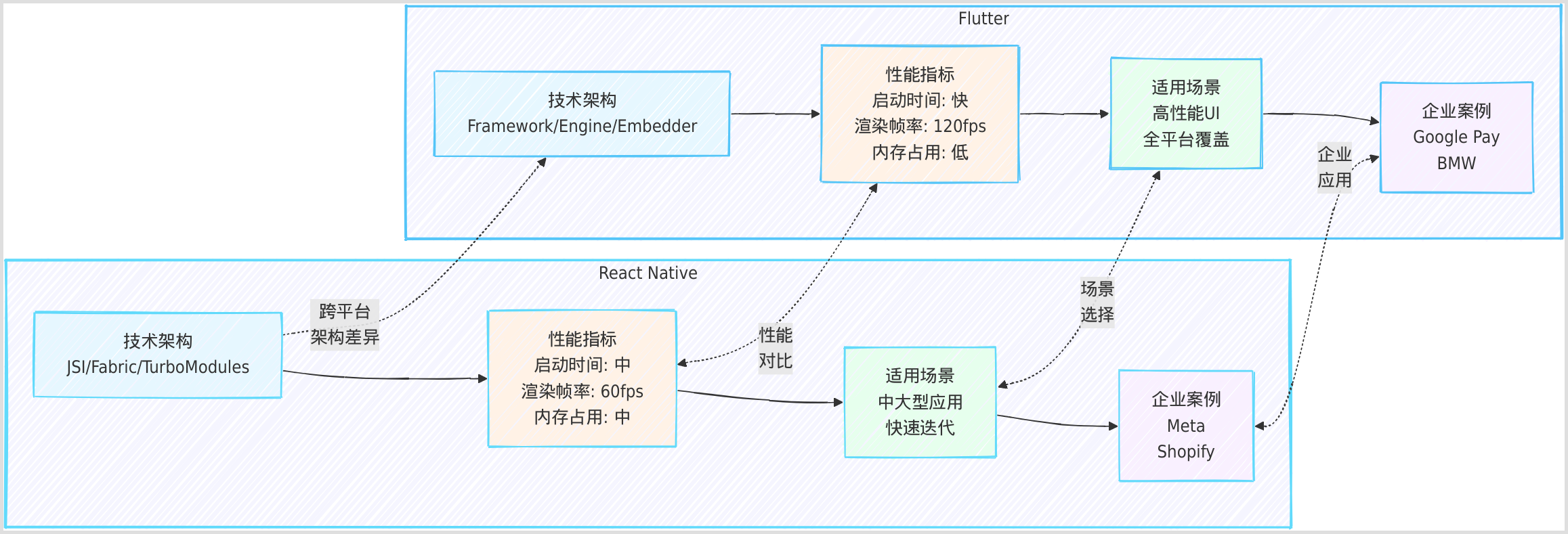
In the realm of App software development, React Native and Flutter stand out as the two dominant cross-platform frameworks. Centered around the JavaScript ecosystem and the Dart language, respectively, they offer highly efficient solutions for building cross-platform applications. React Native has secured a significant foothold in enterprise-grade applications, leveraging its compatibility with existing Web technology stacks and the support of a vast community. Flutter, distinguished by its self-rendering UI engine and high-performance rendering capabilities, has increasingly become the preferred choice for teams prioritizing a superlative visual user experience. While differing in their technical architectures, performance characteristics, and optimal use cases, these two frameworks collectively drive both the efficiency and the innovative boundaries of App software development.
3.1 React Native’s New Architecture and Performance Optimization
React Native’s new architecture fundamentally refactors the communication mechanism between JavaScript and native code, as well as the UI rendering pipeline, through three core technologies: the JavaScript Interface (JSI), the Fabric rendering engine, and the Hermes engine. This restructuring significantly raises the performance ceiling for app software development. As a direct interface between the JavaScript and C++ layers, JSI replaces the traditional JSON-serialization-based communication method, enabling JavaScript to directly invoke native functions and thereby eliminating the performance bottlenecks inherent in the traditional bridging model. For instance, the VisionCamera library leverages JSI to achieve real-time processing of 30 MB of frame data per second—a scenario in which the traditional bridging model would suffer from frame loss due to serialization overhead.(React Native Architecture Explained (2026 Edition))The Fabric rendering engine migrates rendering logic from the JavaScript thread to the C++ layer, enabling synchronous layout reads and concurrent rendering—thereby resolving the UI flickering issues inherent in traditional architectures caused by asynchronous layouts. By deploying Fabric within the Facebook app, Meta achieved a 40% improvement in frame rates for complex list scrolling and enabled support for new React 18 features such as Suspense and Transitions.(About the New Architecture – React Native)。As a JavaScript engine specifically optimized for React Native, the Hermes engine reduces app startup times by 30–50% through bytecode pre-compilation, reduced bundle size, and lower memory consumption. In e-commerce applications such as Shopify, the adoption of Hermes has lowered the initial screen load time from 2.8 seconds to 1.5 seconds.(React Native (New) Architecture: Key Performance Boosts)。
The experiences of Meta and Shopify have validated the commercial value of the new architecture. Meta has fully adopted this new architecture across its applications—including Instagram and WhatsApp—achieving an increase in cross-platform code reusability to 85%, while simultaneously compressing the feature synchronization cycle between iOS and Android versions from weeks to days. (React Native at Scale: Enterprise Report 2026)。Shopify, through optimization combining Fabric and Hermes, boosted the interactive responsiveness of product detail pages by 60% and increased user dwell time by 22%, directly driving a 15% rise in conversion rates.(React Native performance tactics: Modern strategies and tools | Sentry)。These case studies demonstrate that the new React Native architecture is particularly well-suited for large-scale software development projects, capable of meeting the requirements for a high-performance, low-latency user experience while ensuring cross-platform consistency.
3.2 Flutter’s Cross-Platform Consistency and Enterprise Applications
Flutter’s technical strengths are primarily embodied in its Impeller rendering engine, hot-reload development mode, and single-codebase design philosophy—attributes that enable it to excel in enterprise applications where visual consistency and development efficiency are paramount. As Flutter’s next-generation rendering engine, Impeller resolves the performance lag issues that the traditional Skia engine often encountered on lower-end devices by pre-compiling GPU shaders, minimizing OpenGL state transitions, and optimizing rendering paths. In the Google Pay application, Impeller boosted animation frame-rate stability to 92%, delivering performance—particularly on Android devices—that surpassed that of native applications by 15%.(Flutter performance architecture: Designing for scale from day one)。热重The Hot Reload feature enables developers to update the UI in real time while preserving the application’s state, shortening the debugging cycle from minutes to seconds. Leveraging this capability, BMW’s 300-person development team accelerated the iteration speed of new features by 40%.(Top Companies Using Flutter in 2026 [Updated])。Furthermore, Flutter’s self-drawing UI architecture ensures pixel-perfect consistency across both iOS and Android platforms. By utilizing Flutter, Nubank unified the interfaces across six different platforms, achieving a code reuse rate of 92% while simultaneously reducing the time required to launch new features from eight weeks—the duration needed for separate dual-platform development—down to just three weeks.(Top Companies Using Flutter in 2026 [Updated])。
Enterprise-scale use cases further validate Flutter’s scalability. Following its migration to Flutter, Google Pay saw a 35% reduction in code volume—streamlining 1.7 million lines of native code into a single codebase—along with a 40% decrease in maintenance costs and a 28% improvement in user satisfaction.(Top Companies Using Flutter in 2026 [Updated])。Following its adoption of Flutter, the My BMW app now supports the localization requirements of over 30 markets; leveraging Dart’s AOT compilation, it has achieved a 50% reduction in startup time while maintaining a smooth 60fps frame rate even on lower-end Android devices.(Top Companies Using Flutter in 2026 [Updated])。These practical applications demonstrate that Flutter is particularly well-suited for enterprise app development projects that demand high UI consistency and frequent, synchronized iterations across multiple platforms; its architectural design provides the technical foundation necessary to support large-scale team collaboration and global deployment.
IV. App Development: Architectural Design and Process Standards
Architectural design and process standards serve as the core pillars of a successful App Software Development project, directly determining the system’s scalability, maintenance costs, and iteration efficiency. The selection of an appropriate architecture enables the system to accommodate the demands of business growth, while standardized development processes ensure seamless team collaboration and consistent delivery quality. Together, these two elements form the comprehensive assurance framework that guides App software development from initial concept through to final implementation.
4.1 Choosing Between Layered and Microservices Architectures
In App Software Development, the selection of an architectural style requires striking a balance between simplicity and flexibility; layered architecture and microservices architecture represent two dominant approaches in this regard. Layered architecture vertically partitions a system into a presentation layer, a business logic layer, and a data layer. Each layer possesses clearly defined responsibilities and interacts solely with its adjacent layers, characterized by its simplicity of implementation, ease of comprehension, and high development efficiency. For instance, the application architecture officially recommended by Android comprises a presentation layer (UI components and ViewModels), a data layer (repositories and data sources), and an optional domain layer, utilizing a Single Source of Truth (SSOT) and Unidirectional Data Flow (UDF) to ensure data consistency.(应用架构指南| App architecture)。Huawei’s HarmonyOS features a layered architecture that is further subdivided into a Product Customization Layer, a Basic Features Layer, and a Common Capabilities Layer. This structure supports the principle of “develop once, deploy across multiple devices,” with the Common Capabilities Layer providing shared functionalities—such as common UI components and data management—to enhance code reusability.(分层架构设计-应用架构- 华为HarmonyOS开发者)。However, as business complexity increases, a layered architecture may fall victim to the “architectural sinkhole” anti-pattern—a scenario in which a specific layer becomes bloated and difficult to maintain due to shouldering an excessive number of responsibilities.
A microservices architecture, conversely, decomposes an application into independently deployable, small-scale services; each service is built around a specific business domain and communicates via an API gateway. Its core advantages lie in fault isolation (where the failure of a single service does not impact the overall system), independent scalability (allowing for the on-demand allocation of resources to services experiencing high loads), and technical stack flexibility (enabling different services to adopt the technologies best suited to their needs). Microsoft Azure notes that microservices simplify schema updates through data isolation, thereby mitigating the risks associated with modifications that arise when multiple components share data within a monolithic application.(Microservices Architecture Style – Microsoft Learn)。The transformation case of global fashion retailer ASOS is highly representative: to support global growth and rapid innovation, ASOS partnered with Ensono to build a microservices architecture based on Microsoft Azure, breaking down its legacy monolithic system into independent services such as user identity, loyalty, and order management. This architecture enabled ASOS to achieve independent service deployment and global hyperscale—supporting peak traffic events like Black Friday—while driving a 30% increase in annual revenue and boosting the share of its international business to 60%.(Delivering global identity, loyalty and microservices solutions for ASOS)。However, microservices also introduce challenges regarding complexity—such as distributed tracing, service discovery, and maintaining data consistency—necessitating the support of a mature DevOps culture and a robust monitoring framework.
Architectural decisions require a comprehensive assessment of team size, business complexity, and growth projections: startups or applications with limited functionality are better suited to a layered architecture to minimize initial costs; conversely, enterprise-grade applications characterized by a large user base, independent business modules, and a need for rapid iteration—such as e-commerce platforms or financial systems—find that a microservices architecture is far more effective in supporting their long-term growth. The case of ASOS demonstrates that when an enterprise faces the demands of global expansion and frequent feature updates, the flexibility and scalability afforded by microservices significantly outweigh the inherent simplicity of a layered architecture.
4.2 Implementation Steps for the MVP Development Process
The MVP (Minimum Viable Product) development process is a critical methodology in App Software Development for validating product-market fit; its core principle lies in rapidly gathering user feedback through a minimal feature set to mitigate development risks. Problem identification and market validation serve as the starting point of this process, requiring a clear definition of the target audience and their core pain points. For instance, the founder of Buffer tested user willingness to pay for a social media scheduling tool by utilizing a landing page; they employed a simple webpage solely to collect email addresses and pricing feedback, and only initiated development after validating the market demand.(12 MVP Examples That Proved Long-Term Startup Success)。This phase requires integrating market research—such as competitor analysis and user interviews—to ensure that the product addresses a genuine, unmet need.
Prioritizing features is a pivotal element in the success of an MVP; it is essential to strictly distinguish between “essential features” and “nice-to-have” enhancements. The MVP development process advocated by Start Designs emphasizes retaining only those features necessary to validate the core value proposition—much like how early-stage Uber implemented only the basic “request a ride” function, while Airbnb initially offered nothing more than a simple room listing page.(MVP Development Guide 2026: Process, Examples, Benefits, Cost)。Prioritization can be conducted using the RICE (Reach, Impact, Confidence, Effort) model or the MoSCoW (Must have, Should have, Could have, Won’t have) method to ensure that resources are concentrated on key functionalities. For instance, Deel—a global hiring and payroll platform—focused its MVP on the single feature of “international contractor payments,” expanding into full-time employee management only after validating market demand.(12 MVP Examples That Proved Long-Term Startup Success)。
Rapid iteration and feedback integration form the closed loop of the MVP process. Development teams should adopt Agile methodologies, delivering testable versions in 2-to-4-week cycles and gathering data through methods such as instrumentation analysis and user interviews. Dropbox’s MVP strategy stands as a classic example: by utilizing a demonstration video rather than a fully functional product, they attracted hundreds of thousands of user registrations, thereby validating the viability of the “cross-device file synchronization” concept and providing a clear direction for subsequent development.(12 MVP Examples That Proved Long-Term Startup Success)。It is worth noting that an MVP is not a “shoddy product”; its core functionalities must guarantee stability and usability. Since 62% of users will uninstall an app due to crashes or errors, the testing phase cannot be overlooked.(App Maintenance Costs in 2026: What to Budget – CatDoes)。During the iterative process, a team must decisively adjust its direction based on feedback: Notion, initially positioned as a “web-building tool,” pivoted to become a “collaborative knowledge base” in response to user feedback, ultimately evolving into a product valued at over $10 billion.(12 MVP Examples That Proved Long-Term Startup Success)。
4.3 Automation Practices in the CI/CD Workflow
The CI/CD (Continuous Integration/Continuous Deployment) workflow significantly enhances the efficiency and quality of App Software Development through the automation of building, testing, and deployment processes. Its core value lies in frequent integration (reducing code conflicts), automated testing (mitigating regression risks), and rapid deployment (shortening iteration cycles). GitLab’s guidelines highlight that the key distinctions between CI/CD and traditional development are as follows: developers commit code frequently (rather than integrating in distinct phases); testing is integrated throughout the entire workflow (rather than being performed as a one-time activity after development); and deployment is automated (rather than being executed manually).(Ultimate guide to CI/CD: Fundamentals to advanced implementation)。A typical CI/CD pipeline consists of the following stages:
- Code Submission and Building: Developers push their code to a version control system (such as Git), triggering an automated build. This stage requires optimizing build speed—for instance, by utilizing Docker layer caching (rebuilding only the modified layers) and distributed caching (such as Gradle Remote Cache) to minimize redundant computations. In enterprise-grade environments, Kaniko is frequently adopted to build container images as an alternative to the “Docker-in-Docker” pattern, thereby mitigating the risk of host privilege leakage.(Beyond the Basics: Architecting Enterprise Grade CI/CD Pipelines)。
- 自动化测试:Upon completion of the build, the pipeline automatically executes unit, integration, and E2E tests. For instance, it utilizes Testcontainers to launch a real database for integration testing, thereby ensuring environmental consistency.(Beyond the Basics: Architecting Enterprise Grade CI/CD Pipelines)。GitLab CI use cases demonstrate that, by configuring the
.gitlab-ci.ymlfile, testing can be divided into multiple parallel jobs—such as static code analysis (Checkmarx), dependency scanning (Snyk), and performance testing—thereby significantly shortening the testing cycle.(Ultimate guide to CI/CD: Fundamentals to advanced implementation)。 - 部署与监控:Upon successful testing, the code is automatically deployed to the staging environment; it is then promoted to production following either manual approval or automated validation. The GitOps paradigm is particularly critical at this stage: by storing deployment configurations—such as Kubernetes manifests—within a Git repository, tools like ArgoCD or Flux can automatically synchronize them to the cluster, thereby realizing the concept of “Configuration as Code.” For instance, a payment service might use GitLab CI to update image tags, triggering an automated deployment via GitOps tools, while simultaneously utilizing Prometheus to monitor the health status of the service post-deployment.(Beyond the Basics: Architecting Enterprise Grade CI/CD Pipelines)。
ASOS’s microservices architecture relies on CI/CD to enable rapid iteration: its Azure-based pipelines support hundreds of deployments daily, mitigating risk through Blue/Green deployments and Canary releases to ensure 99.9% platform availability during Black Friday.(Delivering global identity, loyalty and microservices solutions for ASOS)。In practice, enterprises must prioritize “shifting security left” by integrating SAST (Static Application Security Testing), SBOM (Software Bill of Materials) generation, and image signing into the CI phase—for instance, by using Syft to generate SBOMs and Cosign for signing—thereby intercepting vulnerabilities before deployment.(Beyond the Basics: Architecting Enterprise Grade CI/CD Pipelines)。
(CS193p – Developing Apps for iOS – Stanford University)。The curriculum emphasizes design principles such as the separation of Model and UI, as well as functional programming paradigms. Through project case studies—such as CodeBreaker—it helps learners master the complete development workflow, ranging from UI construction to data management.
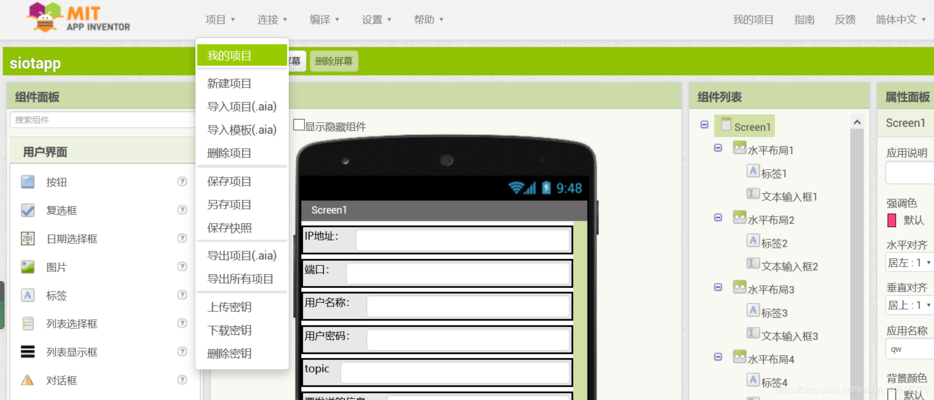
MIT App Inventor lowers the barrier to mobile app development through its visual programming environment, making it particularly well-suited for beginners and educational settings. Its officially provided…tutorials库It includes various case studies ranging from basic to advanced, such as building chat applications using CloudDB components, implementing location tracking using Location Sensor, and developing voice interaction functions using Text-To-Speech components. Each tutorial clearly indicates its difficulty level (e.g., beginner, intermediate, advanced) and core components, with accompanying block programming examples intuitively demonstrating the logical design process. Furthermore,MIT App Inventor LibraryIt also provides detailed component documentation, development guides (such as building multi-screen applications and responsive design), and troubleshooting support, offering comprehensive backing for rapid prototyping and educational practices.
GitHub’s App development guide focuses on platform integration and the construction of automated toolchains. GitHub Apps enable developers to extend GitHub’s functionality via APIs; their official documentation…(About creating GitHub Apps)The document provides a detailed exposition of key steps such as app registration, permission configuration, authentication mechanisms (e.g., JWT generation and installation access tokens), and Webhook event handling. For instance, the guide clearly distinguishes between two operational modes—”acting on behalf of a user” (requiring a user authorization token) and “independent operations” (utilizing an installation access token)—and offers best practices for scenarios involving the development of CI checks, CLI tools, and similar applications. The 2026 GitHub Report highlights that successful app integration necessitates a strong emphasis on the principle of least privilege, automated testing, and clear contribution guidelines in order to effectively navigate the complexities inherent in global developer collaboration.(What to expect for open source in 2026 – The GitHub Blog)。
5.2 Compliance Requirements of International Standards Organizations
The specifications established by international standards organizations set benchmarks for security, performance, and interoperability in App Software Development. Adhering to these standards not only enhances product quality but also strengthens user trust and market competitiveness.
The W3C Web App Manifest is a core standard for Progressive Web Apps (PWAs); it defines the metadata format for web applications, including attributes such as the name, icons, start URL, and display mode (e.g., full-screen, standalone window). Its latest specification, released in January 2026…(Web Application Manifest – W3C)It further clarified details such as the definition of scope, orientation locking, and theme color. For instance, through the manifest file, developers can specify icon adaptation strategies for the application across different devices—such as declaring icons in various sizes and formats—thereby ensuring a consistent visual presentation on both Android and iOS platforms. The “display: standalone” mode supported by this standard enables Web applications to adopt the look and feel of native apps; when combined with Service Workers to facilitate offline functionality, this significantly enhances the user experience. Case studies—such as that of Pinterest—demonstrate that applications adhering to W3C PWA standards can achieve a 60% increase in user engagement.(Progressive Web Apps 2026: PWA Performance Guide)。
As the international standard for information security management, ISO 27001:2022—specifically Clause A.8.25 of its Annex A—sets forth requirements dedicated to the secure lifecycle of application development. The standard emphasizes embedding security controls throughout every stage of the software development lifecycle, including: the segregation of development, testing, and production environments; the definition of security requirements based on risk; secure coding standards (such as security guidelines tailored to specific programming languages); and vulnerability scanning and penetration testing.(ISO 27001:2022 Annex A Control 8.25 Explained – ISMS.online)。StackHawk’s practical application demonstrates that, through “Configuration as Code” (such as defining scanning policies via YAML) and integration with CI/CD pipelines, automated vulnerability detection and remediation verification can be achieved—thereby satisfying ISO 27001 requirements for “systematically identifying, assessing, and treating vulnerabilities.”(ISO 27001:2022 Application Security Requirements – StackHawk)。Furthermore, the standards mandate that third-party developed code undergo equivalent security testing to ensure supply chain security.
Taken together, academic and community resources provide technical pathways and best practices for App Software Development, while international standards safeguard product security and reliability from a compliance perspective. Developers should proactively integrate these resources, internalizing regulatory requirements as an integral part of their development processes, to achieve the high-quality and sustainable delivery of applications.
VI. Key Steps for Successfully Launching an App Software Development Project
Successfully launching an App software development project requires systematic planning and precise execution. The core process encompasses four distinct phases: requirements definition, architectural design, compliance assurance, and continuous iteration. Scientific project management methodologies (such as Agile development) and integrated toolchains (such as CI/CD pipelines) serve as the foundation for ensuring delivery quality and efficiency, while cross-functional collaboration and user requirements validation determine the product’s market fit. Outlined below are the key implementation steps for each phase:
6.1 Requirements Definition and Technology Selection
Requirements definition must be grounded in a multi-stakeholder needs analysis, utilizing user interviews, market research, and competitor analysis to clearly define core functionalities. The CTO focuses on technical feasibility and architectural scalability; startup teams prioritize Minimum Viable Product (MVP) features to manage costs; while corporate decision-makers must balance compliance requirements with ROI objectives. For instance, a financial application would prioritize the integration of identity verification and transaction encryption modules, whereas an educational application might focus on content distribution and learning data tracking.(How to Choose the Right Tech Stack for Your Startup?)。





